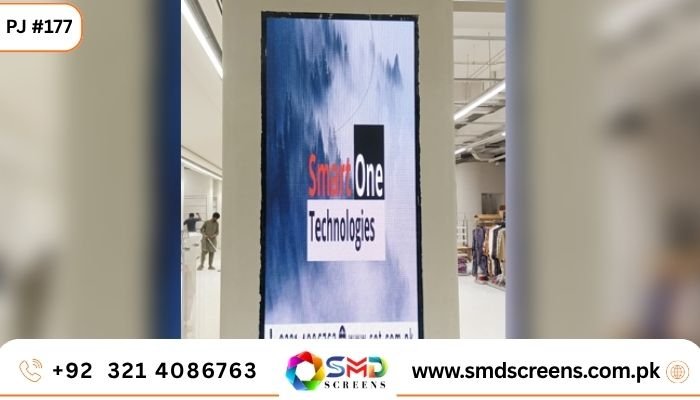
Indoor Digital Wall Signage Screen Install at Chase Up, Karachi
| TL;DR — Quick Answer Smart One Power Solution installed a 3 x 7 foot Indoor Digital wall signage screen at Chase Up in Karachi, mounted on a main wall inside the store rather than at a checkout point. Unlike a small counter display, this screen is built to be seen from several metres away, making it a better fit for storewide branding, department promotions, and general customer-facing announcements. It’s a taller, narrower format than a typical wide video wall, which suited the specific wall space available at this Chase Up location. This piece covers why that shape and size were chosen, how it compares to other in-store display formats, and what went into getting it installed properly. |
Why This Wall Needed Its Own Kind of Screen
A retail floor has more than one kind of space, and each one calls for a different display. A checkout counter is close-range and personal. A main interior wall is the opposite — it’s meant to catch attention from a distance, hold it for a few seconds as someone walks past, and communicate something quickly. Chase Up already had a small dual-sided screen running at their checkout counters, handled separately, but this wall needed something built for a completely different viewing distance and purpose: storewide announcements, department signage, and general brand messaging that everyone walking through that part of the store would see.
The Basics: What Got Installed
| What | Detail |
| Where | Chase Up, Karachi (interior wall signage) |
| Display type | Indoor Digital wall signage screen |
| Screen size | 3 x 7 feet |
| Typical use | Storewide announcements, department promotions, brand messaging |
| Installed by | Smart One Group Of Companies |
Why 3 x 7 Feet, and Why That Shape
This isn’t the usual wide, landscape-style format most people picture when they think of a video wall. A 3 x 7 foot screen is taller and narrower, which happens to suit a lot of retail wall spaces better than a wide rectangle would — especially where the available wall is a vertical strip between shelving units or store fixtures rather than one big open surface. Choosing a format that fits the actual wall, instead of forcing a standard shape into a space it wasn’t built for, is what keeps an installation like this looking intentional rather than squeezed in as an afterthought.
How This Differs From the Checkout Counter Screens
It’s worth being clear about this, since Chase Up runs more than one type of display. Our earlier project story on the counter rack Indoor Display Screens at Chase Up covered a small, 1 x 3 foot, dual-sided screen built for close-range viewing right at the till. This wall signage screen is a different job entirely — bigger, single-sided, and built to be read from several metres away by anyone walking through that part of the store. Same retail chain, same city, but two very different display formats solving two very different problems.
What Content Actually Runs on a Screen Like This
- Store-wide promotions and seasonal sale announcements.
- Department-level signage, pointing customers toward specific sections or categories.
- Brand and campaign visuals that reinforce Chase Up’s identity throughout the shopping floor.
- General announcements, such as store timing changes or event notices.
- Rotating content that can be scheduled and swapped without touching printed signage at all.
Picking the Right Pixel Pitch for a Wall People Walk Past
Since this screen is viewed from a few metres away rather than up close, it doesn’t need the same ultra-fine pixel pitch a close-range counter screen would. The logic is the same one covered in our P2.5 SMD Screen guide — match the pitch to how far away people actually stand. For a wall like this, a moderate indoor pixel pitch keeps the image sharp at typical aisle-walking distance without paying for resolution nobody standing several metres back would ever notice.
Brightness for a Busy Retail Floor
Store interiors are rarely dim, and this wall sits in an area with a mix of overhead lighting and nearby foot traffic throughout the day. Getting brightness right here follows the same reasoning laid out in our guide on choosing SMD screen brightness for indoor and outdoor environments — bright enough to stay clearly visible under strong retail lighting, without being tuned so high that it looks harsh or draws the wrong kind of attention.
Getting the Installation Right on a Working Retail Floor
Installing a screen like this isn’t as simple as mounting it on any available wall. The location has to actually make sense for foot traffic, avoid blocking sightlines to shelving or aisles, and still be structurally sound enough to support the panel safely. Smart One Power Solution assessed the wall, foot traffic flow, and existing lighting in that section of the store before finalising the exact position and size for the screen. Cabling was routed cleanly through the wall structure, and the panel was calibrated for even brightness across its full 3 x 7 foot surface before being handed over for daily use — all while working around a store that stays open and busy most of the day.
Why It Makes Sense to Use Two Different Screen Formats in One Store
It might seem simpler to just install the same type of screen everywhere, but that usually ends up being the wrong call. A checkout counter and a main interior wall serve completely different purposes, have different viewing distances, and reach customers at different points in their shopping trip. Treating them as the same problem, and specifying the same screen for both, usually means one of the two ends up either too small to notice or too expensive for what it’s actually doing. Chase Up’s approach — a compact, dual-sided screen for the counters and a larger Indoor Digital wall signage screen for the main floor — is a more deliberate way to cover both jobs properly rather than compromising on one specification for everything.
Why Smart One Power Solution for This Kind of Project
Smart One Power Solution is part of the Smart One Group, founded in 2005, and works alongside its sister company covering digital displays and power systems to deliver end-to-end audio-visual and signage solutions across Pakistan. You can read more about how the group is structured on our About page. For a project like this Chase Up wall signage install, that background means the installation wasn’t treated as a one-size-fits-all product drop-off — it started with understanding the actual retail floor and what that specific wall needed to do.
The same site-first thinking applies across the group’s broader work with Indoor SMD Screens and video wall projects, including institutional installs like the Indoor SMD Video Wall at NAB Islamabad, where matching the display to the actual space mattered just as much as it did on a retail sales floor.
What Other Retailers Can Learn From This
- Don’t assume one screen format works for every part of the store — counters and open walls call for different specs.
- Let the available wall shape guide the screen’s proportions rather than forcing a standard widescreen format everywhere.
- Match pixel pitch to actual viewing distance, since a wall people walk past doesn’t need the same sharpness as a close-range counter screen.
- Plan installation timing and wall assessment around a store that needs to stay open and operating.
- Think about the customer’s position in their shopping journey — close-range counter versus in-motion aisle viewing — before choosing a display type.
A Note on Power and Reliability for a Storewide Signage Network
A single 3 x 7 foot screen doesn’t draw a huge amount of power on its own, but retailers thinking about rolling out wall signage across multiple sections or branches should plan for the combined load rather than treating each screen as an isolated cost. Our guide on SMD screen power consumption walks through how to estimate that properly, which matters even more once a retail chain starts scaling a signage format like this across several locations rather than a single wall.
Keeping Content Fresh Without Overcomplicating Things
One of the quieter benefits of a screen like this is how little effort it takes to keep the content current compared to printed signage. A department promotion that used to mean designing, printing, and physically mounting a new poster now just means updating a file and pushing it to the screen. For a store the size of Chase Up, where promotions and seasonal campaigns change often, that difference adds up to real time saved for whoever manages in-store marketing, without needing a complicated content system to make it work.
Frequently Asked Questions
What is an Indoor Digital wall signage screen used for?
It’s typically used for storewide announcements, department promotions, and brand messaging displayed on an interior wall, viewed from a few metres away rather than up close like a counter display.
Why is this screen a different size and shape from a standard video wall?
The 3 x 7 foot, taller format was chosen to fit the specific wall space available at this Chase Up location, rather than forcing a wide, landscape-style video wall into a space that wasn’t built for it.
How is this different from the counter screens at the same store?
The counter screens are small, dual-sided, and built for close-range viewing right at the till. This wall signage screen is larger, single-sided, and designed to be read from several metres away by customers walking through the store.
Does a wall signage screen like this need the same pixel pitch as a close-viewing display?
No. Since it’s viewed from a greater distance, a moderate pixel pitch works well here, without the added cost of an ultra-fine pitch that would only matter for close-up viewing.
Can a similar Indoor Digital wall signage screen be installed in a different store layout?
Yes, though the exact size, shape, and pixel pitch should be reassessed based on that store’s specific wall space, lighting, and typical viewing distance.
Final Thoughts
The Chase Up wall signage installation shows how a retail chain can use more than one kind of Indoor Digital wall signage screen to cover different needs properly, rather than settling for a single generic display type everywhere. A 3 x 7 foot screen, sized and shaped around the actual wall it sits on, gives this section of the store a clear, effective way to reach customers who are walking through rather than standing still. For retailers weighing something similar, the lesson is the same one that keeps coming up: match the screen to the space and the viewer, not the other way around.
| Thinking about wall signage screens for your retail space? Smart One Power Solution offers free site visits and full design and installation support for Indoor Digital wall signage screens of any size across Pakistan. |