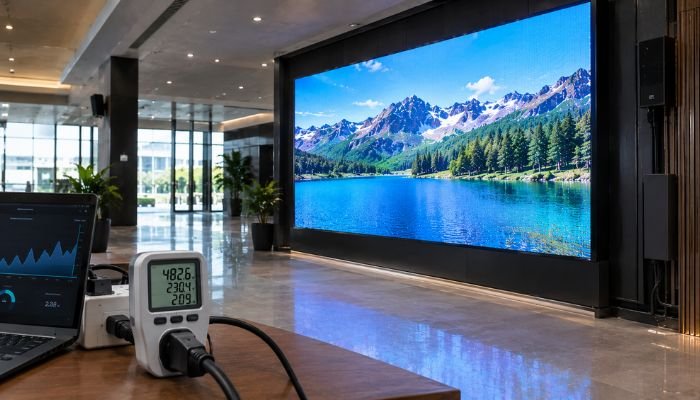
SMD Screen Power Consumption Explained: How Much Electricity Does an LED Display Use?
| TL;DR — Quick Answer On average, an indoor SMD screen consumes between 200 and 450 watts per square metre, while an outdoor SMD screen typically draws 400 to 800 watts per square metre because of its higher brightness output. Actual power consumption depends on factors such as brightness level, pixel pitch, content type, screen size, and whether the display includes smart power-saving features. A typical 6 × 4 foot indoor SMD screen operating for 10 hours a day will have power requirements that vary according to its configuration and brightness settings. Smart One Power Solution can help calculate the expected power consumption for your specific screen size, application, and operating conditions. |
Electricity bills are the one running cost that quietly follows every SMD screen home after installation, yet it’s the number most buyers never ask about before signing off on a purchase. Whether you’re planning a compact indoor SMD screen for a reception desk or a full-scale outdoor SMD screen for a roadside billboard, understanding power consumption upfront helps you budget accurately, choose the right power backup, and avoid surprises on your monthly utility bill. This guide breaks down exactly how much electricity an SMD screen uses, what drives that number up or down, and how to keep your running costs under control — drawing on real installation data from Smart One Power Solution’s projects across Pakistan.
How Is SMD Screen Power Consumption Measured?
Power consumption for an SMD screen is expressed in watts per square metre (W/m²), which tells you how much electricity a single panel draws under normal operating conditions. Multiply that figure by the total screen area, and you get the average power draw of the full display. Manufacturers usually list two numbers on a spec sheet: average power consumption, which reflects typical mixed content, and maximum power consumption, which reflects full white-screen brightness at 100 percent — a scenario that rarely happens during real-world use but is useful for sizing your power supply and backup system correctly.
It’s this gap between average and maximum draw that trips up a lot of first-time buyers. Sizing a generator or UPS around the average figure alone can leave a display underpowered during a bright, high-contrast video segment, which is why Smart One Power Solution always designs backup power capacity around the maximum rating, not the average one.
Indoor vs Outdoor SMD Screen: Power Consumption Compared
Just as brightness requirements differ sharply between indoor and outdoor environments, so does electricity use. An outdoor SMD screen has to output far more light to stay visible under direct sunlight, and that extra brightness comes directly from extra power.
| Screen Type | Average Draw | Peak/Maximum Draw | Typical Daily Runtime |
| Indoor SMD Screen | 200 – 450 W/m² | up to 600 W/m² | 8 – 12 hours |
| Outdoor SMD Screen | 400 – 800 W/m² | up to 1,200 W/m² | 12 – 18 hours |
| Transparent LED Display | 150 – 300 W/m² | up to 450 W/m² | 8 – 14 hours |
| Digital Billboard (large format) | 500 – 900 W/m² | up to 1,300 W/m² | 16 – 24 hours |
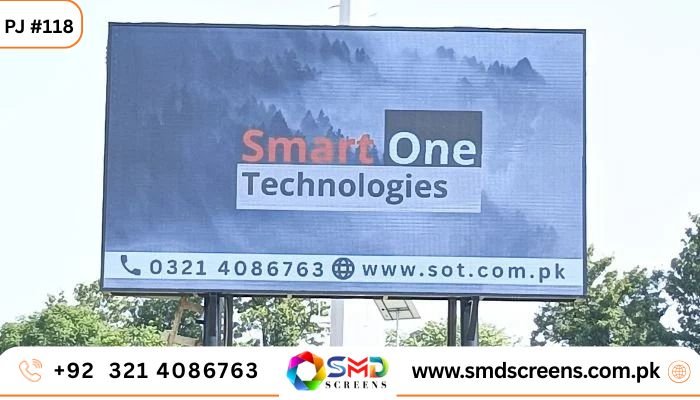
For most retail and corporate clients choosing an Indoor SMD Screen, the difference between the low and high end of that range usually comes down to brightness setting and pixel pitch, not a flaw in the panel itself. On the other hand, an Outdoor SMD Screen running near-continuously on a busy road, such as a digital billboard, naturally sits at the higher end because it can’t afford to dim during the brightest hours of the day.
What Actually Drives an SMD Screen’s Electricity Bill?
Two SMD screens of the exact same size can have very different electricity bills depending on the factors below.
1. Brightness Level
Brightness is the single biggest driver of power draw. As covered in our companion guide on choosing SMD screen brightness for indoor and outdoor environments, pushing a panel to a higher nit rating than the environment actually needs doesn’t just wash out the picture over time — it also raises electricity consumption for no visual benefit. Matching brightness to ambient light is the single easiest way to control running cost.
2. Pixel Pitch and LED Density
A finer pixel pitch packs more LED chips into the same physical area, and more LEDs generally means more total power draw per square metre, even at the same brightness setting. A P1.5 indoor panel used for close-up viewing will typically draw somewhat more than a coarser P4.0 panel of the same size, simply because there are more diodes doing the work.
3. Content Type and Colour Composition
White and light-coloured content pulls noticeably more power than dark backgrounds, because every LED sub-pixel has to fire at once to produce white light. A predominantly dark video wall running deep-colour branding content can use meaningfully less electricity over a month than one running bright white slides or spreadsheets on loop, even on identical hardware.
4. Power Supply Efficiency
Every SMD screen relies on switch-mode power supplies to convert incoming AC electricity into the low-voltage DC current the LED modules need. Cheaper, unbranded power supplies often run at 80 to 85 percent efficiency, wasting the rest as heat, while higher-quality units used in branded panels commonly reach 90 percent or above. Over a year of daily operation, that efficiency gap alone can account for a noticeable difference in the electricity bill.
5. Ambient Temperature and Cooling Load
In Pakistan’s hot summer months, outdoor SMD screens generate additional heat that has to be managed through natural convection or active cooling fans built into the cabinet. Higher ambient temperatures push cooling systems to work harder, which adds a secondary, often overlooked layer of power consumption on top of the LED modules themselves.
6. Smart Power Management Features
Panels equipped with ambient light sensors, scheduled on/off timers, and content-aware dimming automatically scale power draw up or down based on real conditions instead of running at a fixed setting around the clock. These features alone can meaningfully lower monthly consumption without any change to the hardware itself.
Working Out the Real Running Cost of an SMD Screen
Once you know the wattage, calculating an estimated electricity cost is straightforward. The formula is: Power (kW) × Hours of Use per Day × Days per Month × Electricity Rate per Unit = Monthly Cost.
For example, a 6 x 4 foot indoor SMD screen (roughly 2.2 square metres) drawing an average of 300 W/m² consumes about 0.66 kW. Running that screen for 10 hours a day across 30 days uses roughly 198 units (kWh) of electricity a month. At a typical Pakistani commercial tariff, that translates to a modest monthly cost — usually a small fraction of the value the display generates in visibility and engagement. Outdoor and large-format billboard installations scale up proportionally with size, brightness, and runtime, which is why getting an accurate wattage figure at the quotation stage matters far more than most buyers realise.
Practical Ways to Reduce SMD Screen Electricity Consumption
- Match brightness to the actual ambient light of the installation site instead of defaulting to maximum output.
- Enable ambient light sensors so the panel dims automatically at night or on overcast days.
- Schedule automatic shutdown during non-business hours instead of leaving the screen running 24/7.
- Favour darker, brand-appropriate colour palettes in content design where the campaign allows for it.
- Choose panels with high-efficiency power supplies rather than the cheapest available hardware.
- Keep ventilation and cooling components clean and unobstructed so the system isn’t working harder than necessary.
Why Power Planning Matters as Much as Screen Selection
Because Smart One Power Solution was founded in 2005 on power solutions before expanding into SMD LED screens, video walls, and digital displays, every project is engineered with electricity load, backup capacity, and long-term running cost in mind from day one — not treated as an afterthought once the panel is already installed. This is especially important for sites without stable grid power, where an outdoor SMD screen needs a properly sized UPS or generator backup calculated against its maximum draw, not its average one.
That same load-planning discipline shaped real deployments such as the Outdoor SMD Screen installation at MRF PAC Kamra, where a conditioned power system was built alongside the display itself, and the Indoor SMD Video Wall at NAB Islamabad, which paired calibrated LED cabinets with a conditioned backup power system engineered by Smart One Power Solution rather than a generic third-party supply.
This combination of display expertise and power-systems background is what sets Smart One Power Solution apart from suppliers who only sell the screen and leave the electrical planning to someone else.
SMD Screens vs Other Display Technologies: An Electricity Perspective
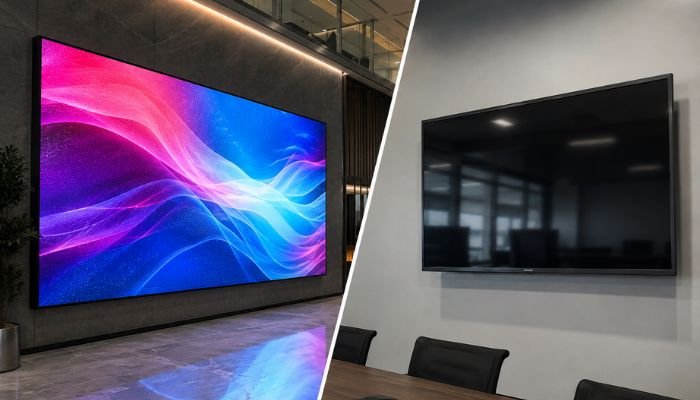
It helps to see SMD screen power draw next to the alternatives businesses usually compare it against. Traditional neon and fluorescent signage typically runs continuously at fixed brightness with no dimming capability at all, which means it draws close to its maximum rating every single hour it’s switched on. Projector-based setups, often considered for conference rooms, use less wattage per unit but require replacement bulbs every few thousand hours, and their effective brightness output per watt is usually lower than a modern SMD panel. Commercial LCD or OLED screens are efficient at smaller sizes, but their per-square-metre power draw climbs quickly once you scale up to large-format displays, and very few LCD panels are rated for sustained outdoor sunlight exposure at all. Measured purely on light output per watt consumed, a well-specified SMD screen remains one of the more efficient large-format display options currently available in the Pakistani market.
Frequently Asked Questions
How much electricity does an SMD screen use per day?
A typical indoor SMD screen running 10 hours a day uses roughly 2 to 4.5 kWh per square metre of screen area, while an outdoor SMD screen running similar hours can use 4 to 8 kWh per square metre due to its higher brightness output.
Is an SMD screen more energy-efficient than a traditional billboard or neon sign?
Yes. Modern LED-based SMD screens use significantly less electricity than older neon or fluorescent signage of comparable size and brightness, while also lasting far longer before components need replacement.
Does a bigger SMD screen always mean a bigger electricity bill?
Generally yes, since power draw scales with screen area, but brightness setting, content colour, and power supply efficiency can make a smaller screen at high brightness use more electricity than a larger screen running at a moderate, well-matched brightness level.
Can an SMD screen run on solar or backup power?
Yes, provided the solar array, inverter, or generator is sized against the screen’s maximum power draw rather than its average draw, which is exactly the kind of calculation Smart One Power Solution carries out before recommending a backup power setup.
Do outdoor SMD screens need more backup power than indoor ones?
Almost always. Outdoor screens run brighter, often for longer daily hours, and are frequently installed in locations with less reliable grid power, so their backup systems need to be sized more generously than an equivalent indoor installation.
Final Thoughts
Power consumption isn’t the most exciting spec on an SMD screen’s data sheet, but it’s one of the few numbers that keeps affecting your budget long after the installation is finished. Understanding watts per square metre, matching brightness to your environment, and planning backup power around maximum draw rather than average draw are the three habits that separate a display that runs smoothly for years from one that comes with constant, avoidable electricity surprises.
| Want an exact power consumption estimate for your SMD screen? Smart One Power Solution provides a free wattage and running-cost estimate for every indoor and outdoor SMD screen project across Pakistan, backed by 15 years of power-systems expertise. |