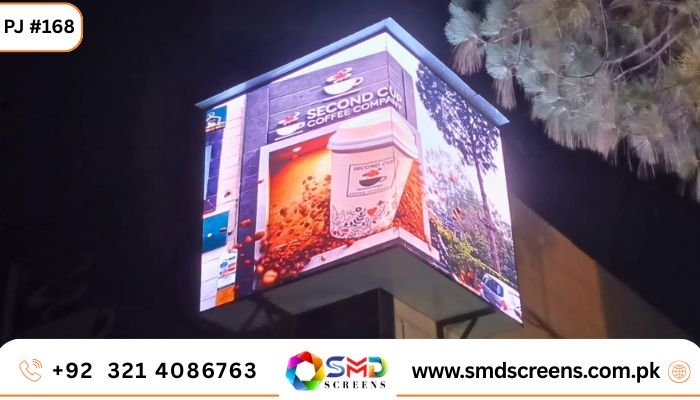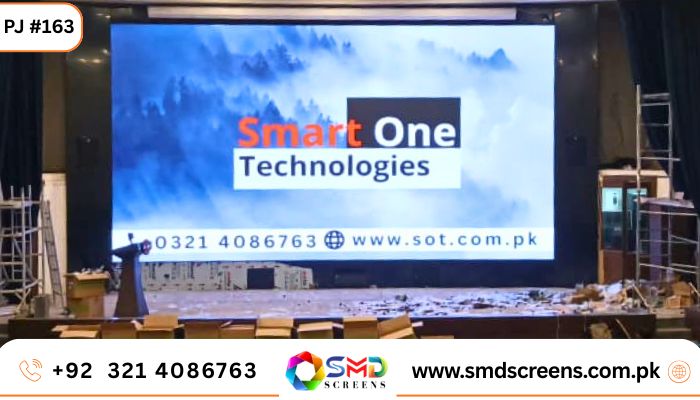
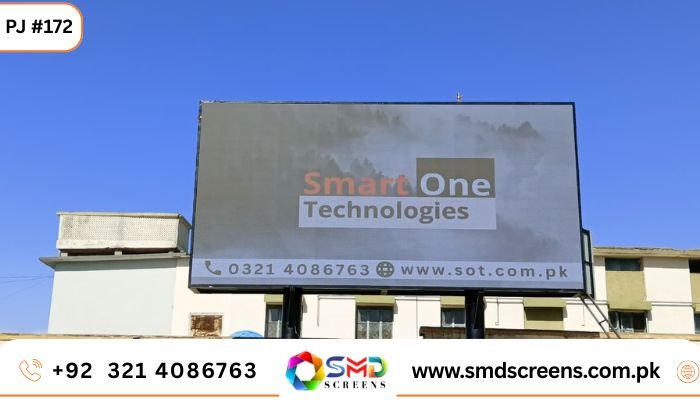
Outdoor SMD Screen Installation at ARF PAC Kamra: A Real-World Case Study
| TL;DR — Quick Answer ARF PAC Kamra now runs a 10 x 20 foot Outdoor SMD Screen built on a P5 pixel pitch using Hikvision LED hardware, installed to give the facility a bright, weather-resistant display that stays clearly visible in open-air daylight conditions. The build included a wind-rated mounting structure, fully sealed outdoor cabinets, and a stable electrical setup developed with Smart One Power Solution so the screen keeps running through voltage dips and grid interruptions. |
Introduction
Putting a screen outdoors is not the same job as hanging one on an interior wall. The moment a display leaves the controlled environment of a building, it has to contend with sun glare, seasonal humidity, dust carried on the wind, and — in Pakistan especially — a power grid that isn’t always predictable. ARF PAC Kamra approached this project with a clear brief: install a large outdoor screen that stays legible at a distance under full sun, holds up physically against Kamra’s weather patterns, and doesn’t go dark the moment there’s a power fluctuation.
That brief translated into a specific technical package: a 10 x 20 foot Outdoor SMD Screen, built on a P5 pixel pitch, using Hikvision LED components, backed by a properly engineered power system. This article documents how that package came together on site, why each specification was chosen, and what the process looked like from the first survey to the final walkthrough — offering a practical reference for anyone in Kamra, Attock, or across Pakistan planning a comparable outdoor LED installation.
Understanding Outdoor SMD Screen Technology
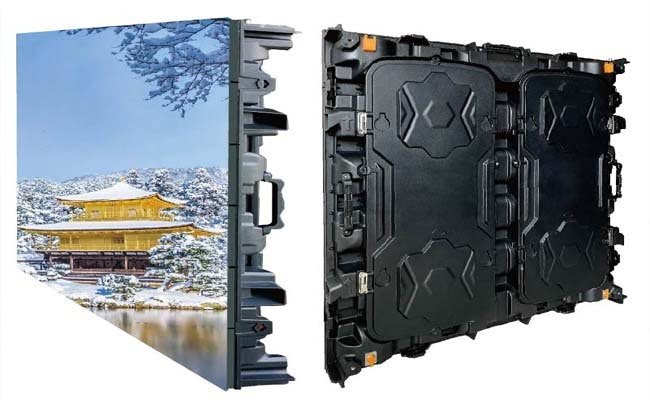
An outdoor SMD screen is built around Surface Mounted Device LED chips housed inside cabinets specifically engineered for exposure to the elements. It’s worth separating this from an indoor panel that’s simply been placed outdoors, because the two are not interchangeable. A genuine outdoor unit is designed from the ground up with:
- Sealed enclosures that resist rain, humidity, and airborne dust
- Substantially higher brightness output so the picture doesn’t fade against daylight
- A structural frame built to tolerate wind pressure rather than a lightweight indoor bracket
- LED components rated to handle temperature swings from cold mornings to hot afternoons
- Pixel pitch options tuned for the distance viewers will actually stand from the screen
The pixel pitch point deserves a closer look, because it’s often misunderstood. A finer pitch isn’t automatically “better” for an outdoor screen — it depends entirely on how far away people will be watching from. Outdoor installations are usually viewed from further back than indoor displays, so a mid-range pitch like P5 frequently delivers the sharpest practical image without paying for LED density the eye won’t actually resolve at that distance.
Inside the ARF PAC Kamra Project
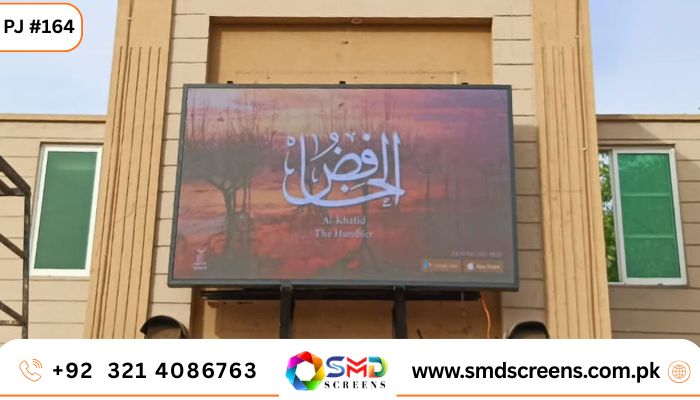
The work at ARF PAC Kamra centered on delivering a single large outdoor SMD screen sized at 10 x 20 feet, using a P5 pixel pitch and Hikvision LED cabinets throughout. The project moved through several distinct phases:
- A detailed site walk-through, mapping sun exposure across the day, prevailing wind direction, and the nearest reliable electrical connection point
- Engineering the support structure to carry a 10 x 20 foot cabinet grid without flexing under wind load
- Sourcing and staging Hikvision P5 outdoor cabinets, selected specifically for their sealed housing and daylight brightness
- Sealing every cabinet interface — joints, cable glands, rear service panels — to keep moisture and dust out permanently, not just at handover
- Running weatherproof cabling for both video signal and power, protected from Kamra’s seasonal humidity
- Building in power resilience alongside Smart One Power Solution, so the display doesn’t drop out during grid instability
- On-site brightness tuning performed under actual sunlight rather than factory presets, followed by full commissioning
Work was sequenced so that structural and mounting activity happened during regular hours, while brightness calibration — which needs real daylight to get right — was scheduled around Kamra’s sun pattern for accurate results.
Why This Specific Build Made Sense for ARF PAC Kamra
The final specification wasn’t chosen arbitrarily. Three practical arguments drove the decision toward a P5, Hikvision-based, 10 x 20 foot outdoor SMD screen.
Viewing distance dictated pixel pitch
At 10 x 20 feet, this screen is read from a reasonable distance rather than up close. P5 gives a genuinely sharp picture at that range while keeping the LED count — and therefore the cost and power draw — proportionate to what’s actually needed.
Hardware reliability mattered more than shaving costs
Hikvision’s outdoor SMD range has a demonstrated history in sealed, exposed installations. For a screen that’s expected to keep working through several Pakistani summers and monsoon seasons, that track record carries real weight compared to unproven alternatives.
Power resilience was treated as a design requirement, not an extra
A screen this size draws meaningful current, and an outdoor electrical connection is rarely as clean as an indoor circuit. Building the power architecture together with Smart One Power Solution from the outset avoided the common mistake of treating backup power as something to bolt on later.
Specification Snapshot
| Specification | Detail |
| Display Type | Outdoor SMD LED Video Screen |
| Dimensions | 10 x 20 feet |
| Pixel Pitch | P5 |
| LED Hardware | Hikvision |
| Enclosure Rating | Sealed, weatherproof outdoor cabinets |
| Brightness Output | High-brightness, daylight-visible |
| Support Structure | Wind-rated steel mounting frame |
| Cable Infrastructure | Outdoor-grade, moisture-sealed |
| Electrical Backup | Conditioned power with backup via Smart One Power Solution |
A P5 pitch places LED clusters 5 millimeters apart — dense enough for clean, legible visuals but not so fine that it becomes an unnecessary expense for a screen viewed from typical outdoor distances. Paired with the 10 x 20 foot canvas at ARF PAC Kamra, it strikes a workable balance between image quality, energy consumption, and total project cost.
How the Installation Came Together, Phase by Phase
Phase 1: Reading the Site Before Touching Any Hardware
Every outdoor project starts with understanding the environment it will live in. At ARF PAC Kamra, the team spent time mapping how sunlight moves across the intended screen location throughout the day, checking which direction prevailing winds typically come from, and confirming where the nearest suitable power connection was available. Skipping this step is how outdoor installations end up with glare problems or structural surprises later.
Phase 2: Building a Frame That Can Actually Handle the Load
A 10 x 20 foot outdoor screen is not a lightweight fixture. The support structure was engineered specifically for this footprint, factoring in wind resistance and the combined weight of the full Hikvision cabinet array, rather than adapting a generic mounting kit.
Phase 3: Mounting and Sealing the Cabinets
Cabinets went up in a tightly aligned grid, with attention paid to every point where water or dust could theoretically find a way in — panel seams, cable entries, and access doors. This is the step that determines whether a screen is genuinely outdoor-rated or just an indoor panel wearing a weatherproof label.
Phase 4: Wiring the Screen for Outdoor Conditions
Signal and power cabling were run through weather-sealed conduits designed to handle Kamra’s humidity and temperature range without degrading over time — a detail that’s easy to overlook but expensive to fix later if done poorly.
Phase 5: Engineering Power Stability With Smart One Power Solution
Given the screen’s size and its exposure to a less predictable outdoor power supply, the electrical plan was developed alongside Smart One Power Solution to deliver conditioned, backed-up power. That partnership meant the Outdoor SMD Screen at ARF PAC Kamra could absorb short outages and voltage swings without flickering, resetting, or risking damage to the LED modules — a critical detail for any facility that can’t tolerate a screen going dark unexpectedly.
Phase 6: Calibrating Under Real Sunlight, Not Lab Settings
Factory brightness settings rarely match a specific site’s actual sun exposure. The team tested and adjusted brightness at multiple points during the day at Kamra to make sure the screen stayed clearly readable from early morning through to dusk, rather than relying on generic defaults.
Phase 7: Commissioning and Handover
The project closed with sustained run testing, a check of every sealed joint under simulated wet conditions, confirmation that the power backup engaged correctly, and a hands-on briefing for ARF PAC Kamra staff on operating and maintaining the display going forward.
What This Kind of Screen Delivers in Practice
Facilities looking at a similar outdoor investment usually want to know what they’re actually getting for the cost. Based on how this build performs at ARF PAC Kamra, the practical returns include:
- A picture that holds up in full daylight instead of washing out at midday
- Physical durability against rain, dust, and Kamra’s seasonal temperature range
- The flexibility to scale the cabinet configuration up or down for different sites
- Fewer long-term maintenance headaches than older outdoor display technology
- Consistent uptime, particularly with a properly engineered power backup in place
- A visual presence strong enough to serve announcements or information display needs across a wide outdoor area
The same underlying advantages apply well beyond this one project — outdoor advertising displays, transport terminals, industrial sites, and any institution needing a large, sunlight-legible screen can draw on the same design logic.
Problems That Typically Derail Outdoor LED Projects — and How This One Avoided Them
Glare washing out the image at peak sun. Solved by specifying genuinely high-output Hikvision panels and calibrating on-site rather than trusting default brightness levels.
Water and dust finding their way into the cabinets. Solved by treating every seam and cable entry as a potential failure point during installation, not as something to patch afterward.
Wind stress on a large panel array. Solved with a structural frame purpose-built for the 10 x 20 foot footprint, engineered for wind load from the start rather than retrofitted.
Unstable outdoor power supply. Solved through the conditioned, backed-up electrical system built in partnership with Smart One Power Solution, which keeps the screen protected from spikes and outages alike.
Keeping the Screen Performing Long-Term
An outdoor screen ages differently than an indoor one, so ongoing care matters more here. The support plan for ARF PAC Kamra includes routine inspection of seals and structural fittings, ready access to spare Hikvision cabinets for fast swaps if a module ever fails, seasonal checks ahead of monsoon periods, and a direct line for urgent technical issues. That combination is what keeps brightness and reliability close to day-one performance well past the first year.
What Drives the Cost of an Outdoor SMD Screen
Anyone budgeting for a project like this should expect the final number to reflect several distinct variables rather than a single flat rate:
- Pixel pitch — P5, as used here, is a cost-efficient choice for medium-to-long outdoor viewing distances
- Total screen size — costed per square foot of active display, as with this 10 x 20 foot build
- Hardware brand — Hikvision’s weatherproof reliability carries a fair premium over unproven alternatives
- Structural engineering — wind-rated mounting adds real cost but protects the long-term investment
- Power infrastructure — conditioned supply and backup, delivered through partners like Smart One Power Solution
- Ongoing support — warranty coverage and scheduled maintenance visits
A clear quotation should break these out individually so the client can see exactly what each part of the budget is paying for.
Frequently Asked Questions
What does P5 pixel pitch actually mean?
It refers to a 5-millimeter spacing between LED clusters — a middle-ground pitch well suited to outdoor screens viewed from moderate distances, balancing sharpness against cost and power draw.
Why choose Hikvision LED hardware for an outdoor build?
Hikvision’s outdoor SMD cabinets are built with sealed, weatherproof housings and have a strong track record in long-term exposed installations, which matters for a screen expected to run for years without indoor protection.
Is backup power really necessary for an outdoor screen?
For a display this size, yes. Voltage instability or a short outage can otherwise interrupt or damage the display. The ARF PAC Kamra screen uses a backup system built with Smart One Power Solution specifically to prevent that.
How is an outdoor SMD screen kept safe from rain and dust?
Through sealed cabinet housings and carefully treated cable entry points and access panels, so moisture and dust never reach the internal electronics.
How long does a project like this typically take?
From initial site survey through structural work, cabling, calibration, and commissioning, a 10 x 20 foot outdoor installation generally spans a few weeks, depending on site conditions and scheduling.
Final Thoughts
The Outdoor SMD Screen now running at ARF PAC Kamra — 10 x 20 feet, P5 pixel pitch, built on Hikvision hardware — reflects what happens when weatherproofing, structural engineering, and power planning are treated as equally important from day one rather than handled as separate afterthoughts. The backup power arrangement built with Smart One Power Solution keeps the screen operating reliably even when Kamra’s grid isn’t cooperating, and the sealed Hikvision cabinets are built to handle years of open-air exposure without losing performance. Any institution, industrial site, or commercial facility in Kamra or elsewhere in Pakistan weighing a similar outdoor display now has a concrete, tested reference point to work from.
See related work: Indoor SMD Screen projects and our full project portfolio.
| Planning an Outdoor SMD Screen Installation Near Kamra? SMD Screens Pakistan planned and installed the ARF PAC Kamra outdoor video screen from first site visit to final commissioning. If your facility needs a large-format outdoor display, digital signage, or sunlight-readable screen, our team can help you get the pixel pitch, weatherproofing, and power backup right the first time. Explore our Outdoor SMD Screen solutions or contact our team today for a free site assessment and quotation. |