SMD Screen Rental vs Purchase in Pakistan: Which Option Is Better for Events and Businesses?
| TL;DR — Quick Answer Whether to rent or purchase an Indoor SMD Screen depends almost entirely on how often it will be used. For one-off events — weddings, conferences, product launches, or short exhibitions — renting is usually the more practical and cost-effective choice, since it avoids the upfront investment and storage burden of owning a screen used only occasionally. For businesses that need a display running daily — retail stores, corporate lobbies, restaurants, or control rooms — purchasing an Indoor SMD Screen typically delivers better long-term value. Whichever option fits, pairing the screen with reliable power from Smart One Power Solution protects the investment from Pakistan’s occasional voltage fluctuations. |
Introduction
Anyone planning to use an SMD screen in Pakistan — whether for a single wedding event or a permanent retail display — eventually faces the same question: rent or buy? It’s tempting to frame this purely as a budget decision, but the more useful way to think about it is usage frequency. A screen used once for a three-day exhibition has a completely different cost logic than one running twelve hours a day in a busy restaurant.
This article breaks down the real trade-offs between renting and purchasing an Indoor SMD Screen in Pakistan, covering cost, flexibility, technical considerations, and the specific situations where each option makes more sense. Whether you’re planning a single event or considering a permanent installation for your business, this comparison is built to help you make the decision based on your actual usage pattern rather than sticker price alone.
Understanding the Two Options
Renting an SMD Screen means paying for temporary use of a screen — typically for a specific event duration — including delivery, setup, technical support, and dismantling, usually handled entirely by the rental provider’s team.
Purchasing an SMD Screen means buying the hardware outright, installing it permanently (or semi-permanently) at a fixed location, and taking on ongoing responsibility for its operation, maintenance, and eventual component replacement.
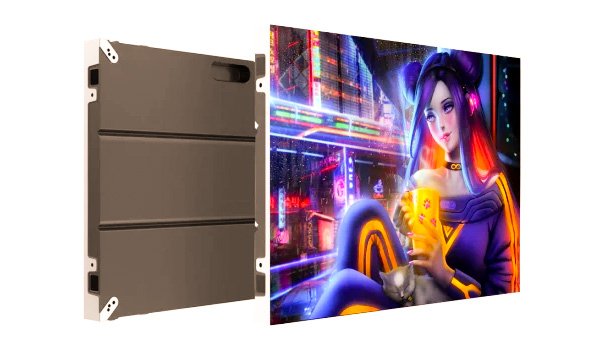
Both options ultimately provide access to the same underlying technology — a modular LED display built from Surface Mounted Device (SMD) panels — but the financial and logistical structure around each is fundamentally different.
When Renting an Indoor SMD Screen Makes More Sense
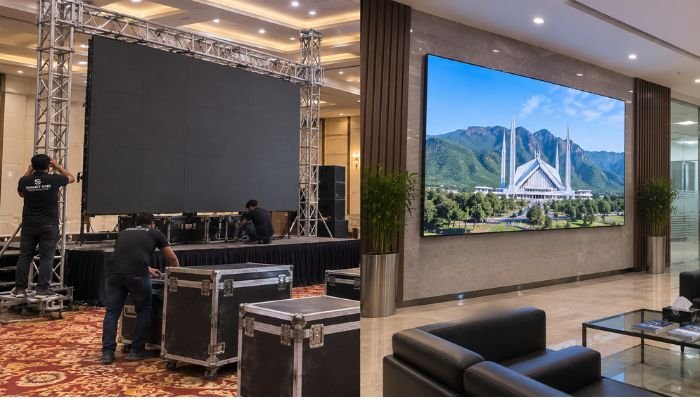
One-Off Events. Weddings, conferences, corporate galas, and product launches typically need a screen for a matter of hours or days, not months — renting avoids paying for a full asset that will sit unused for the rest of the year.
Exhibitions and Trade Shows. Businesses participating in trade shows or exhibitions usually need a screen only for the event’s duration, making a rental far more sensible than purchasing hardware that would otherwise sit in storage between shows.
Testing Before Committing. Businesses uncertain whether a permanent SMD screen installation is worth the investment can rent first, testing the impact and audience response before committing to a purchase.
Uncertain or Temporary Locations. Pop-up retail spaces, temporary event venues, or short-term promotional campaigns benefit from the flexibility of rental, since the screen isn’t tied to a fixed physical installation.
Avoiding Storage and Maintenance Burden. A rented screen comes with the rental provider’s responsibility for transport, setup, technical support, and dismantling — removing the burden of storage space and ongoing upkeep entirely.
When Purchasing an Indoor SMD Screen Makes More Sense
Daily-Use Business Displays. Retail stores, restaurants, corporate lobbies, and reception areas that need a display running continuously benefit far more from ownership, since the cost per day of use drops dramatically over months of operation.
Control Rooms and Command Centers. Facilities requiring a permanent, always-on display for monitoring or data visualization need a purchased, professionally installed screen rather than a temporary rental setup.
Consistent Branding Needs. Businesses that want a consistent, always-visible brand presence — a lobby wall, a storefront display — are better served by a permanent installation than repeatedly renting for recurring use.
Long-Term Cost Efficiency. For any use case running several times a month or more, the cumulative cost of repeated rentals often exceeds the price of outright purchase within a year or two, making ownership the more financially sound choice.
Custom-Sized Installations. A screen built to fit a specific wall or architectural space is typically a purchased, custom installation rather than a rental unit, which usually comes in standard modular configurations designed for quick setup and teardown.
Cost Comparison: Rental vs Purchase
Upfront Cost. Renting requires a much smaller upfront payment than purchasing, since the cost is spread across a single event or short-term period rather than paid in full at once.
Cost Per Use Over Time. A purchased screen has a high initial cost but a low cost per use over its operational lifespan, while a rented screen has a low initial cost but a cost that recurs every time it’s needed.
Break-Even Point. For most businesses, purchasing becomes more cost-effective than repeated rental once the screen is needed more than a handful of times per year — the exact break-even point depends on rental frequency and the specific screen size involved.
Hidden Costs of Ownership. Purchasing comes with additional costs rental doesn’t — installation, ongoing maintenance, eventual component replacement, and power infrastructure — all of which should factor into any cost comparison.
Hidden Costs of Rental. Frequent rental can accumulate delivery, setup, and technical support fees each time, which adds up meaningfully for businesses that end up needing a screen more often than initially expected.
Technical Considerations That Apply to Both Options
Pixel Pitch for the Venue or Space. Whether rented or purchased, the screen’s pixel pitch should match the actual viewing distance of the audience — a close-viewing indoor event needs a finer pitch than a large hall viewed from further back.
Brightness for the Environment. Indoor events and permanent indoor installations generally need less brightness than any outdoor use, but the specific venue’s ambient lighting still needs to be accounted for either way.
Screen Size and Configuration. Rental screens typically come in modular, quickly assembled configurations, while purchased installations can be custom-sized for a specific permanent space — a distinction worth considering based on how precisely the screen needs to fit its intended location.
Technical Support Availability. Rental packages usually include on-site technical support for the event’s duration, while purchased installations need an ongoing support and maintenance plan established separately.
Why Power Reliability Matters for Both Rented and Purchased Screens
Whether a screen is rented for a single evening event or purchased for years of daily use, an unreliable power supply undermines the investment either way. A screen that flickers or shuts down during a wedding reception is just as disruptive as one that goes dark during a busy retail afternoon — the audience or customer experience suffers regardless of whether the display was rented or owned.
This is where Smart One Power Solution becomes relevant to both sides of the decision. For rental events, particularly those held at venues with uncertain power quality, conditioned power support protects against voltage fluctuations that could interrupt the event. For purchased, permanently installed screens, building in backup power capability from the outset protects the investment from Pakistan’s occasional grid instability over years of continuous operation.
Making the Right Call: A Simple Decision Framework
How often will the screen actually be used? Occasional use points toward rental; frequent or continuous use points toward purchase.
Is the display tied to a specific permanent location, or does it need to move between venues? A fixed installation favors purchase; a mobile or event-based need favors rental.
What’s the available budget structure? A smaller upfront budget with recurring smaller payments favors rental; a larger one-time budget with lower ongoing costs favors purchase.
Does the space require a custom-sized screen, or would a standard modular configuration work? Custom architectural spaces often favor purchase; standard event setups work well with rental.
How critical is long-term brand consistency? Businesses needing an always-visible, permanent brand presence are better served by purchase than repeated rental.
Rental vs Purchase at a Glance
| Factor | Rental | Purchase |
| Upfront cost | Low | High |
| Cost per use over time | High if frequent | Low over time |
| Best for | One-off events | Daily/continuous use |
| Storage & maintenance | Provider handles it | Owner’s responsibility |
| Customization | Standard modular setups | Fully custom-sized |
| Technical support | Included for event | Separate support plan needed |
How SMD Screens Pakistan Supports Both Rental and Purchase Decisions
SMD Screens Pakistan works with event organizers, businesses, and institutions across Pakistan to provide both rental and purchase options for Indoor SMD Screens, helping clients choose the right path based on their actual usage needs rather than defaulting to one option.
Honest Usage Assessment. Rather than pushing a purchase when a rental would serve the client better, the team assesses actual usage frequency and event patterns before recommending an option.
Full-Service Rental Support. Rental packages include delivery, professional setup, on-site technical support, and dismantling, allowing event organizers to focus on the event itself rather than the technical logistics.
Custom Purchase Installations. For businesses choosing to purchase, screens are specified and installed to match the exact space, viewing distance, and lighting conditions of the permanent location.
Power Planning for Either Path. Whether renting for an event or purchasing for permanent use, power reliability is addressed through coordination with Smart One Power Solution, protecting the display from voltage issues either way.
Frequently Asked Questions
Is renting an Indoor SMD Screen cheaper than buying one?
For occasional, one-off use, renting is almost always cheaper upfront. For frequent or continuous use, purchasing typically becomes more cost-effective once the cumulative cost of repeated rentals exceeds the price of outright ownership.
How far in advance should I book an SMD screen rental for an event?
Booking as early as possible is recommended, particularly during peak event seasons like wedding season, to ensure availability of the right screen size and configuration for your venue.
Can a rented SMD screen be customized for a specific event theme or branding?
Yes, content displayed on a rented screen can typically be fully customized for the event, even though the physical hardware itself is usually a standard modular configuration rather than a custom-built installation.
What happens if a purchased SMD screen develops a fault after installation?
A proper purchase agreement should include after-sales support, warranty coverage, and access to spare components, so any fault can be addressed without lengthy downtime.
Does power backup matter for a one-night event rental, or only for permanent installations?
It matters for both. A power interruption during a wedding or corporate event is just as disruptive as one affecting a permanent display, which is why conditioned power support is worth considering even for short-term rentals.
Conclusion
The rental versus purchase decision for an Indoor SMD Screen in Pakistan ultimately comes down to how often and how the display will actually be used, not simply which option costs less upfront. Occasional events and short-term needs are almost always better served by renting, while daily-use business displays and permanent installations generally deliver stronger long-term value through purchase. Whichever path fits your situation, pairing the screen with reliable, conditioned power — like the systems built by Smart One Power Solution — protects the experience from the kind of power interruptions that can undermine even the best-planned event or installation.
| Not Sure Whether to Rent or Buy? SMD Screens Pakistan offers both rental and purchase options for Indoor SMD Screens, helping event organizers and businesses choose the right path based on actual usage needs, backed by reliable power from Smart One Power Solution. Explore our Website www.smdscreens.com.pk or contact our team today for a free consultation. |