Transparent Glass SMD Screen Displays in Pakistan: Architectural Window Video Walls for Retail Showrooms & Commercial Facades
| Quick Answer Transparent glass SMD screens in Pakistan deliver up to 80% natural light transparency while projecting ultra-bright (5,000+ Nits) commercial visual media directly across retail window facades and auto showroom glass. SMD Screens in Pakistan (SOPS) engineers lightweight, energy-efficient transparent displays using Unilumin and LAMPRO architectural hardware nationwide. |
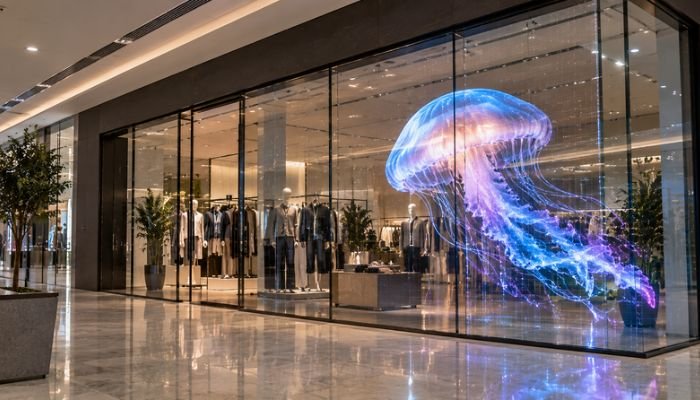
A shop window is the most valuable piece of real estate a retailer owns, and most of the time it is wasted on a poster or an empty pane. Fill it with a normal screen and you block the view into the store. A transparent glass SMD screen in Pakistan solves that conflict: the image appears on the glass, while shoppers still see the products and daylight still enters the building. This guide explains how glass facade SMD screens work, how they differ from ordinary indoor screens, and what to plan before installing one.
What Is a Transparent Glass SMD Screen?
A transparent glass SMD screen is an LED display built from slim strips with open gaps between them, fitted on or behind glass. Light passes through the gaps, so viewers see the moving picture and the scene behind it at the same time. The display behaves like a layer of light on the window rather than a wall in front of it.
You can explore the wider range on our transparent LED display page, or read our detailed transparent LED screen guide for specifications by pitch.
Transparent Glass SMD Screen vs Traditional Indoor SMD Screen
| Feature | Traditional Indoor SMD Screen | Transparent Glass SMD Screen |
| Light transparency | 0%, fully opaque | 75% to 80% natural light passes through |
| Weight | About 28 kg/m² | About 8 kg/m² |
| Daytime sun visibility | About 1,000 nits, washed out in sun | 5,000+ nits, readable in daylight |
| Airflow and heat | Closed cabinet, needs active cooling | Open structure lets air dissipate heat naturally |
| Best location | Interior walls | Windows, glass facades and atriums |
The first two rows explain why a standard screen cannot do this job. An opaque wall blocks the view and the light, and at 28 kg per square metre it also loads the glass frame heavily. The brightness row decides whether the display works at all: a 1,000-nit indoor panel disappears in the sun, while 5,000 nits stays vivid on a street-facing window.
How 75% to 80% Transparency Works
Transparency comes from geometry. The LEDs sit on thin strips, and the space between strips is open glass. Wider spacing means more open area, so transparency rises, but the picture is coarser and needs a longer viewing distance. That trade-off is why we choose the pitch by measuring how far your audience stands from the glass.
5,000+ Nits: Readable in Direct Sunlight
Shop windows catch the sun for hours. To keep the picture readable, transparent screens drive their LEDs at much higher brightness than indoor panels. A level above 5,000 nits keeps content vivid at noon, and automatic dimming lowers it at night so the display does not dazzle passers-by or waste power. For comparison, see how high-brightness technology behaves outdoors on our outdoor SMD screens page.
Lightweight at 8 kg per Square Metre
Weight matters on glass. A display of about 8 kg per square metre puts far less load on frames, mullions and anchors than a 28 kg indoor cabinet. It also makes installation faster and the structure simpler. Even so, engineers must check the glass type, thickness and fixings before any work starts, because the light weight does not remove the need for a structural survey.
Airflow and Energy Efficiency
Closed indoor cabinets trap heat and need active cooling. A transparent display is open by design, so air flows through the structure and carries heat away naturally. That lowers cooling needs, reduces noise and cuts electricity use. With automatic brightness control, the display is energy-efficient compared with a conventional LED wall.
Glass Facade SMD Screens for Retail and Auto Showrooms
Retail brands use window displays to announce launches and seasonal sales without hiding the products behind. Car showrooms use full-height glass to show moving brand films over a real vehicle, so passers-by see both the message and the car. Because daylight still enters, interior lighting costs stay lower than with a blocked window.
Commercial Glass Window SMD Display in Lahore
Interest in a commercial glass window SMD display in Lahore comes from fashion stores, electronics showrooms, banks and food brands on busy roads and mall frontages. Our Lahore office at Faisal Town handles the survey, frame design, installation and training. We recommend visiting a live demonstration before choosing pitch, because transparency and detail change noticeably between configurations.
See-Through SMD Screen in Karachi
A see-through SMD screen in Karachi often serves tall commercial towers, hotels and shopping centres where large glass areas face the street. Coastal humidity and strong sun mean sealing, ventilation and brightness need careful specification at survey stage.
Transparent Video Wall for Corporate Atriums
A transparent video wall also works inside buildings. Corporate atriums hang one in front of glass to show welcome messages, events and live dashboards, while keeping the space bright and open. Exhibition halls use them as moving partitions that still let visitors see across the room. For related formats, see our video walls and digital signage pages.
Designing Content for Glass
- Use dark backgrounds: black areas emit no light, so the glass looks clear.
- Choose bright colours and bold text: they read best against a street background.
- Favour motion: moving graphics suit transparent displays better than dense static slides.
- Avoid full white screens: they block the view into the store.
Installation Steps
- Site survey: measure the glass, check the frame and note the sun direction.
- Structure design: plan fixings that carry the load safely.
- Mounting and cabling: hide power and signal routes in frames or mullions.
- Calibration: balance colour and brightness, and set automatic dimming.
- Training: your team learns to manage playlists and schedules.
What Affects the Price?
The price of a transparent glass SMD screen depends on area, pitch and transparency level, brightness, structure, controller, access and content creation. A site survey gives the only reliable quotation. Send your glass dimensions through our contact page.
Why SMD Screens in Pakistan (SOPS)
Smart One Power Solutions has supplied SMD screens in Pakistan since 2005, with offices in Lahore and Karachi. Our specialities include fine-pitch P0.8 to P1.8 displays and architectural transparent glass installations, using Unilumin and LAMPRO hardware. See completed work on the Our Projects page, read the blog, or learn about us.
Frequently Asked Questions
How transparent is a transparent glass SMD screen?
SOPS screens let up to 80% of natural light through, depending on the configuration.
Can it be seen in direct sunlight?
Yes. Brightness above 5,000 nits keeps content readable in daylight.
Is it heavy for my glass?
No. It weighs about 8 kg per square metre, but engineers still check the glass and fixings.
Do you install in Lahore, Karachi and Islamabad?
Yes. SOPS supplies and installs transparent displays across Pakistan, with offices in Lahore and Karachi.
| Planning a Transparent Glass SMD Screen in Pakistan? Share your glass size, location and viewing distance with the SOPS team. We will recommend the right configuration, then send a clear quotation. • Call: +92 42 35929400 | +92 308 4666059 • Email: info@smdscreens.com.pk • Get started: Request a free quote • Lahore office: 658 Block B, Faisal Town, Lahore |