How to Choose SMD Screen Brightness for Indoor and Outdoor Environments
| TL;DR — Quick Answer For an indoor SMD screen, aim for 800 to 1,500 nits of brightness, since indoor lighting is controlled and anything brighter can strain the eyes and waste energy. For an outdoor SMD screen, you need at least 5,000 nits, and ideally 6,000 to 8,000 nits, so the display stays clearly readable in direct sunlight. The right number ultimately depends on ambient light, viewing distance, pixel pitch, and whether the screen has automatic brightness control. Smart One Power Solution recommends measuring the installation site’s peak daylight or interior lux levels before finalizing a brightness rating, so the SMD screen performs reliably in every season and lighting condition. |
Walk past any mall entrance, highway billboard, or corporate lobby in Lahore or Karachi today, and there’s a good chance an SMD screen is doing the talking. But not every SMD screen is built the same way, and brightness is the single specification that decides whether that screen looks stunning or washed out. Choose a brightness level that’s too low for an outdoor site, and the picture disappears the moment the sun comes out. Choose one that’s too high for a boardroom, and viewers end up squinting instead of paying attention. This guide breaks down exactly how to choose SMD screen brightness for indoor and outdoor environments, using the same measurement standards, ambient-light logic, and real installation experience that Smart One Power Solution applies on every project across Pakistan.
What Does ‘Brightness’ Actually Mean on an SMD Screen?
Brightness on an SMD screen is measured in nits, a unit that describes how much light the LED modules emit per square metre. One nit roughly equals the light of one candle spread over a square metre of surface. Manufacturers sometimes also quote luminance in candela per square metre (cd/m²), which is the technical name for the same measurement — 1 nit equals 1 cd/m². The higher the nit rating, the more visible the screen remains as ambient light in the room or the sky increases.
It’s worth separating this from contrast ratio and refresh rate, two other specs that affect how a picture looks. Brightness tells you whether the image is visible at all in a given environment; contrast and refresh rate tell you how clean and flicker-free that image looks once it’s visible. A well-specified SMD screen balances all three, but brightness is the starting point because it’s the one dictated almost entirely by where the screen will be installed.
Indoor vs Outdoor: Why the Same Screen Won’t Work in Both Places
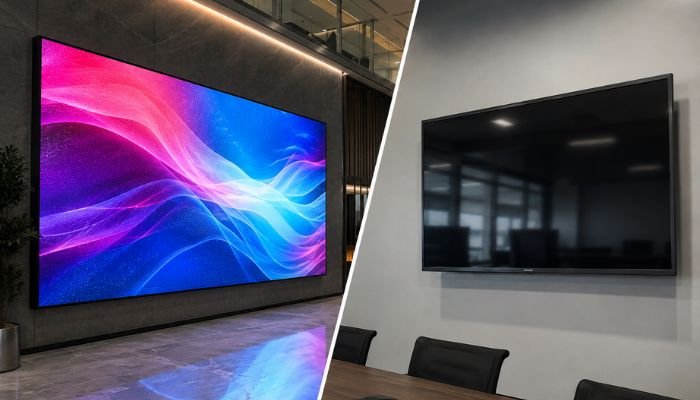
Indoor and outdoor environments are lit by completely different sources, at completely different intensities, and that gap is the reason brightness requirements vary so widely. A typical office or retail interior sits somewhere between 300 and 500 lux of ambient light. Open sky on a bright afternoon can exceed 100,000 lux. An indoor SMD screen never has to fight that kind of glare, while an outdoor SMD screen has to compete with it every single day.
Recommended Brightness for an Indoor SMD Screen
| Indoor Setting | Typical Ambient Light | Recommended Brightness |
| Conference & meeting rooms | Low, controlled lighting | 600 – 900 nits |
| Retail stores & showrooms | Moderate, mixed lighting | 800 – 1,200 nits |
| Lobbies & reception areas | Daylight near glass entrances | 1,000 – 1,500 nits |
| Control rooms & studios | Very low, dimmed lighting | 300 – 600 nits |
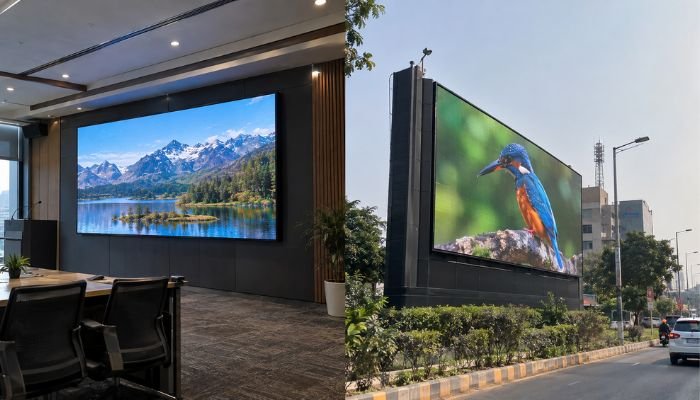
Most standard installations from Smart One Power Solution — including the Indoor SMD Screens range used for retail and hospitality — sit comfortably in the 800 to 1,500 nit range, which keeps colours accurate and energy consumption reasonable without ever looking dim.
Recommended Brightness for an Outdoor SMD Screen
| Outdoor Setting | Typical Sun Exposure | Recommended Brightness |
| Shaded facade or covered area | Indirect sunlight | 4,000 – 5,000 nits |
| Roadside billboard, open sky | Full, direct sunlight | 6,000 – 8,000 nits |
| High-traffic highway signage | Full sun + long viewing distance | 8,000 – 10,000 nits |
| Stadium & event screens | Mixed day and night use | 5,500 – 7,000 nits |
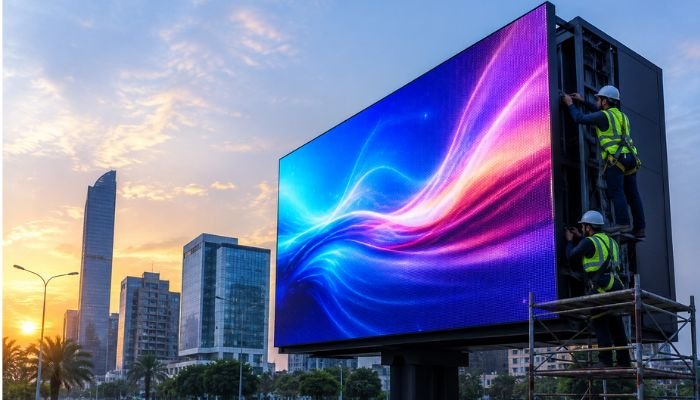
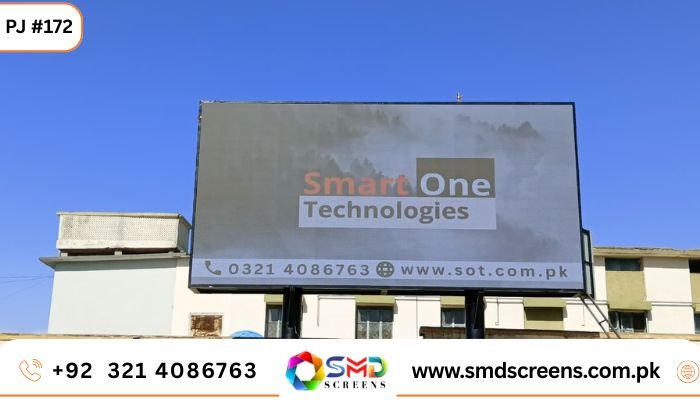
For fully exposed installations, the Outdoor SMD Screens built by Smart One Power Solution are typically rated between 5,000 and 8,000 nits, which is what keeps a digital billboard legible at noon without forcing drivers to squint or slow down to make out the content.
Key Factors That Should Guide Your Brightness Decision
Nit ratings from a spec sheet only tell part of the story. Here are the practical factors that actually determine the right brightness for your specific SMD screen installation.
1. Ambient Light and Sun Orientation
A screen facing east catches harsh morning sun; one facing north in the southern hemisphere-style shade patterns common in Pakistani cities may need far less brightness than a south-facing wall. Always measure or estimate peak lux at the exact installation angle, not just ‘indoor’ or ‘outdoor’ in general terms.
2. Viewing Distance and Pixel Pitch
Pixel pitch (the distance between LED clusters, expressed in millimetres such as P2.5 or P5) and brightness work together. A fine pixel pitch used up close, like the panels in our Indoor P1.5 or P1.8 modules, doesn’t need extreme brightness because viewers sit within a few metres. A coarser pitch used for long-distance outdoor signage often needs both a wider pitch and a higher nit count so the image reads clearly from fifty metres or more.
3. Automatic Brightness Control
A quality SMD screen shouldn’t run at one fixed brightness level around the clock. Ambient light sensors automatically dim the panel at night and ramp it up at midday, protecting eyesight indoors and cutting unnecessary power draw outdoors. Any outdoor SMD screen running at full daytime brightness after sunset is not only uncomfortable to look at, it is also burning through energy and shortening the LED lifespan for no visual benefit.
4. IP Rating and Environmental Sealing
Brightness and weatherproofing are related more than people expect. Outdoor panels rated IP65 on the front and IP54 on the back are sealed against dust and rain, which protects the LED components that generate that higher nit output. A high-brightness panel with poor sealing will degrade faster in Pakistan’s dusty summers and monsoon humidity, losing brightness and colour accuracy well before its expected lifespan.
5. Content Type and Colour Accuracy
Fine text, product photography, and video content all read differently at the same brightness level. High-contrast video content can tolerate slightly lower nits, while detailed text or data dashboards benefit from a brighter, higher-contrast panel so nothing gets lost in glare or shadow.
6. Energy Efficiency and Running Cost
Every additional 1,000 nits adds to the power draw of an SMD screen. Over-specifying brightness for an indoor space, or skipping automatic dimming outdoors, quietly inflates electricity bills over months of continuous operation. Right-sizing brightness to the actual environment is one of the simplest ways to control total cost of ownership.
7. Viewing Angle and Colour Consistency
Brightness doesn’t stay perfectly even from every angle. Cheaper LED modules can lose a noticeable amount of luminance and colour accuracy once a viewer moves 60 to 70 degrees off-centre, which matters for wide lobbies, drive-through billboards, and stadium screens seen from many directions at once. Panels rated for a wide viewing angle hold their brightness and colour far more consistently, so the picture looks the same whether someone is standing directly in front of the SMD screen or walking past it at an angle.
Nits vs Lux: Don’t Confuse the Two Measurements
It’s easy to mix up nits and lux when researching an SMD screen, but they measure two different things. Lux measures how much ambient light is falling on a surface — it’s what you’d read off a light meter at the installation site. Nits measure how much light the screen itself emits toward the viewer. The relationship between the two is what determines legibility: a screen only looks bright enough when its nit output comfortably exceeds the surrounding lux level. This is exactly why the same 5,000-nit outdoor SMD screen can look perfectly bright on an overcast day and only barely adequate under a cloudless midsummer sky — the ambient lux changed, not the panel’s rated output.
Common Mistakes Businesses Make When Choosing SMD Screen Brightness
- Buying an outdoor-rated panel for an indoor space and paying for brightness that never gets used.
- Installing a standard indoor SMD screen near a glass storefront, where afternoon sun washes out the image.
- Ignoring automatic brightness sensors to save cost, then facing complaints about glare at night.
- Choosing pixel pitch based on budget alone, without checking whether the viewing distance actually suits that pitch and brightness combination.
- Skipping a site lux survey and relying only on a supplier’s generic brightness recommendation.
How Smart One Power Solution Gets Brightness Right
With 15 years of experience supplying and installing display technology across Pakistan, Smart One Power Solution treats brightness as a site-specific calculation, not a one-size-fits-all spec sheet. Every project starts with an on-site assessment of ambient lighting, orientation, and viewing distance before a single panel is recommended, whether the requirement is a compact conference-room display or a large-format video wall for a corporate lobby.
This approach has shaped real deployments across the country, including an outdoor SMD screen installation at MRF PAC Kamra, where a P5 pixel-pitch panel was specified precisely to stay sharp and readable under open-sky daylight year-round. That same site-first methodology carries over to indoor deployments such as the Indoor SMD Video Wall at NAB Islamabad, where brightness was tuned for a controlled briefing-room environment instead of raw daylight exposure.
This is what gives Smart One Power Solution its standing as one of Pakistan’s leading SMD screen dealers — not just supplying hardware, but matching every brightness specification to the environment it will actually operate in, backed by after-sales support and warranty coverage on every installation.
Frequently Asked Questions
What is a good brightness level for an SMD screen used indoors?
Between 800 and 1,500 nits works for most indoor spaces, including retail stores, lobbies, and meeting rooms. Rooms with heavy natural daylight near windows should lean toward the higher end of that range.
How many nits does an outdoor SMD screen need?
A minimum of 5,000 nits is recommended for outdoor use, with 6,000 to 8,000 nits being ideal for screens facing direct, unshaded sunlight throughout the day.
Can I use an indoor SMD screen outside if it’s placed in the shade?
Even in shade, outdoor humidity, dust, and temperature swings require proper IP-rated sealing that standard indoor panels don’t have, so a shaded outdoor SMD screen still needs an outdoor-rated model, ideally in the 4,000 to 5,000 nit range.
Does higher brightness always mean better picture quality?
No. Brightness only helps once it matches the ambient light of the space. Beyond that point, extra nits add glare, eye strain, and power consumption without improving picture quality.
Does pixel pitch affect how bright an SMD screen needs to be?
Indirectly, yes. A fine pixel pitch used for close-up viewing, like P1.5 or P1.8 indoor panels, rarely needs very high nits because viewers are close to the screen. A wider pixel pitch used for long-distance outdoor viewing, like P5 or P8, is usually paired with a higher nit rating so the image stays legible from far away.
Do SMD screens automatically adjust their brightness during the day?
Quality panels include ambient light sensors that automatically raise brightness in strong daylight and lower it at night, which protects both viewer comfort and the lifespan of the LED modules.
Final Thoughts
Choosing the right brightness for an SMD screen isn’t about picking the highest nit count available — it’s about matching the panel to the light it will actually have to compete with, indoors or outdoors, day or night. Get that match right, and the screen looks sharp, saves energy, and lasts longer. Get it wrong, and even the most expensive panel on the market will look disappointing in the wrong environment.
| Not sure which brightness level fits your space? Smart One Power Solution offers a free on-site lighting assessment for every indoor and outdoor SMD screen project across Pakistan. |