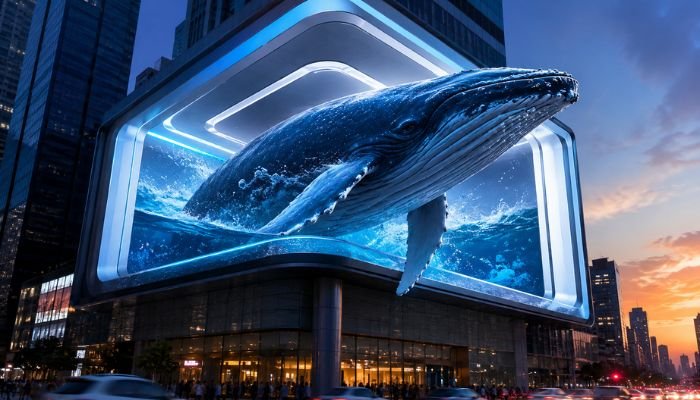
3D Digital Billboard Pakistan 2026 The Future of Outdoor Advertising Has Arrived
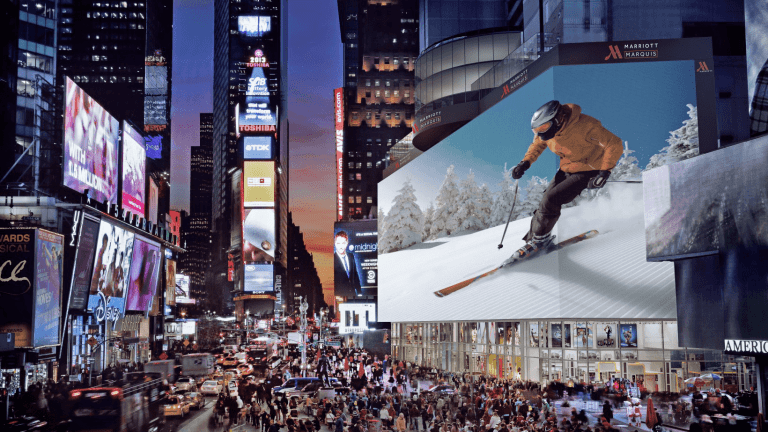
Walk through Lahore’s Gulberg, Karachi’s Shahrah-e-Faisal, or Islamabad’s Blue Area after sunset in 2026, and you will notice something that simply was not there a few years ago: billboards that seem to break out of their own frames. Waves crash toward pedestrians. Cars appear to drive straight off the screen. Brand mascots reach into the street. This is not a special effect reserved for Times Square or Tokyo’s Shibuya Crossing anymore — it is happening on Pakistani streets, and it is changing what “getting noticed” means for brands across the country.
At Smart One Power Solutions, we have watched outdoor advertising evolve from hand-painted hoardings to flex prints, then to flat LED video walls, and now to naked-eye 3D digital billboards. Each shift raised the bar for attention. This one raises it the most. In this article, we explain what 3D digital billboards actually are, why 2026 is the turning point for adoption in Pakistan, how the technology works, what it costs to own one, and how your business can use this format to stand out in an increasingly noisy advertising landscape.
What Is a 3D Digital Billboard, Exactly?
A 3D digital billboard, often called a naked-eye 3D LED display, is an outdoor SMD screen engineered to create the illusion of depth without requiring the viewer to wear any glasses or headset. Unlike a flat LED video wall that simply plays a video, a 3D billboard uses specially produced anamorphic content, ultra-high refresh rates, and — in many installations — a curved or L-shaped screen design to trick the human eye into perceiving objects as if they are physically emerging from the display.
The effect works best on corner-mounted or curved LED screens because the human brain reads the bent geometry as a window into three-dimensional space rather than a flat picture. A giant cola can that appears to pour out of the screen, a tiger that seems to step off the edge, or a smartphone that looks like it is floating above the street — these are all naked-eye 3D effects made possible by precision content design paired with high-performance SMD LED hardware.
How It Differs From Regular SMD Screens
A standard SMD video wall, the kind widely used for shop branding, event backdrops, and roadside advertising across Pakistan, displays flat 2D video and images. A 3D digital billboard uses the same core SMD LED technology — pixel pitch, brightness, refresh rate — but adds:
- Anamorphic content built specifically for the screen’s viewing angle
- Higher refresh rates (often 3840Hz to 7680Hz) to eliminate flicker during fast 3D motion
- Curved, corner, or L-shaped cabinet construction for true depth perception
- Extreme brightness levels (commonly 8,000 to 10,000 nits) so the illusion holds up in direct daylight
Why 2026 Is the Turning Point for Pakistan
Pakistan’s outdoor advertising industry has been quietly building toward this moment for several years. Three forces are converging in 2026 to make 3D digital billboards commercially viable in a way they were not before.
1. Falling Hardware Costs
SMD LED panel manufacturing has matured significantly, and high-refresh, high-brightness outdoor panels that once carried premium pricing are now accessible to mid-sized Pakistani businesses, not just multinational brands. Bulk procurement, improved local assembly capability, and competition among suppliers have brought per-square-meter costs down year over year.
2. Urban Infrastructure and CPEC-Driven Growth
Continued investment tied to the China-Pakistan Economic Corridor has accelerated commercial real estate development in Lahore, Karachi, Islamabad, Faisalabad, and Gwadar. New shopping malls, transit corridors, and mixed-use developments are being built with digital signage infrastructure in mind from day one, creating natural mounting points for large-format 3D displays.
3. Saturated Attention, Starved for Novelty
Pakistani consumers are more digitally saturated than ever — scrolling past hundreds of ads daily on their phones. A flat billboard, however well designed, competes for a glance of two or three seconds. A 3D billboard does something different: it makes people stop, point their phones, and record. That organic social sharing is, in itself, a second wave of free advertising that flat formats simply cannot generate.
How Naked-Eye 3D LED Technology Works
Understanding the mechanics helps explain why not every screen can simply be “converted” to 3D, and why getting this right requires both the correct hardware and genuine content expertise.
Pixel Pitch and Resolution
Pixel pitch — the distance between LED clusters, commonly noted as P1.8, P2.5, P3, P5, P8, or P10 — determines how sharp and seamless the illusion appears up close. Most 3D billboard installations favor tighter pixel pitches (P2.5 to P4) at street level so that fine details in the anamorphic content, such as shadows, reflections, and edges, remain crisp enough to sustain the depth illusion rather than collapsing into a blurry, obviously digital image.
Refresh Rate and Flicker-Free Motion
Because 3D content typically involves fast-moving objects appearing to fly, fall, or burst toward the viewer, a low refresh rate causes visible flicker that breaks the illusion instantly, especially when filmed on a smartphone camera for social sharing. Premium 3D installations run at refresh rates as high as 3840Hz to 7680Hz, ensuring the motion stays smooth whether viewed live or through a phone screen — which matters enormously given how much of this content’s value comes from being reshared online.
Brightness and Weatherproofing
Pakistan’s outdoor environment is unforgiving — intense summer sun in Karachi and Multan, monsoon humidity in Lahore, dust storms, and temperature swings that range from near-freezing winter nights in Islamabad to scorching 45°C-plus summer afternoons. A 3D billboard must maintain brightness levels typically between 8,000 and 10,000 nits to remain visible against direct daylight, paired with an IP65 or IP67 weatherproof rating to resist rain and dust infiltration over years of continuous outdoor operation.
Anamorphic Content Design
The hardware is only half the equation. The illusion of depth is created entirely through anamorphic content — video specifically distorted and rendered to appear three-dimensional only from a particular viewing angle, usually the angle pedestrians or drivers experience as they approach the corner where the screen is mounted. This requires specialized 3D content studios, not standard video editing, and is typically the single most overlooked cost in a 3D billboard project budget. A poorly produced 3D video on excellent hardware will still look flat and unconvincing.
The Business Case: Why Pakistani Brands Are Investing
For Pakistani businesses weighing whether a 3D digital billboard justifies the investment, the return tends to show up in three distinct ways.
Dwell Time and Recall
Studies on out-of-home advertising consistently show that novelty and motion increase the time a viewer’s attention stays on an ad. A 3D illusion is, by definition, novel in most Pakistani cities right now, which means it earns longer glances and stronger brand recall than a static or flat-video equivalent placed in the same location.
Earned Social Media Reach
A genuinely impressive 3D billboard gets filmed and shared on TikTok, Instagram, and Facebook by passersby without the brand paying for that distribution. This earned media effect has repeatedly turned single billboard installations in other markets into content that reaches far beyond the physical location, and Pakistani audiences are just as active on short-video platforms, making this multiplier effect available locally.
Premium Brand Positioning
Being among the first brands in a city to run a 3D billboard signals investment, confidence, and modernity. For sectors competing heavily on perception — real estate developers, telecom operators, automotive brands, and retail chains — this positioning value can matter as much as the direct advertising reach.
Where 3D Digital Billboards Work Best in Pakistan
Not every location suits a 3D installation. The illusion depends heavily on viewing angle, foot traffic patterns, and ambient lighting. Locations that tend to deliver the strongest results include:
- High-footfall commercial corners in Lahore (Gulberg, MM Alam Road, Liberty Roundabout)
- Major retail and business intersections in Karachi (Shahrah-e-Faisal, Tariq Road, Clifton)
- Premium commercial hubs in Islamabad (Blue Area, Centaurus vicinity)
- Shopping mall entrances and atriums where pedestrians naturally pause
- Corner plots at major signal-controlled intersections, where vehicles stop long enough to view the full sequence
Planning Your 3D Billboard Project: Key Considerations
Site Survey and Structural Assessment
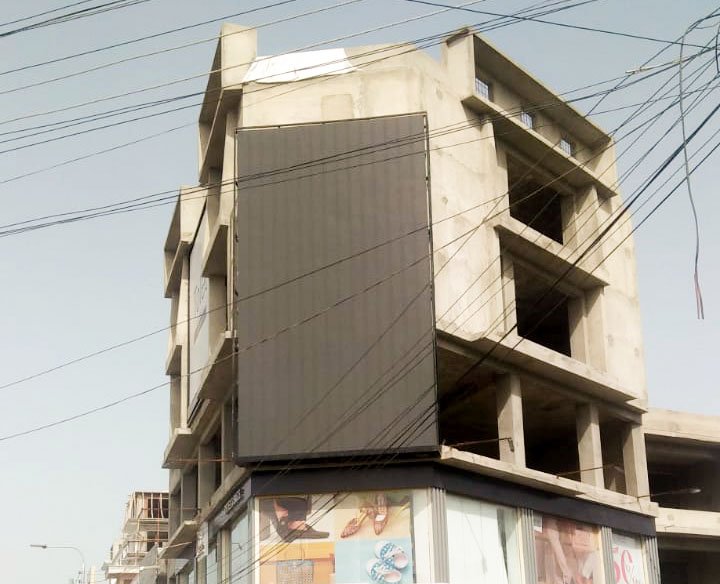
Because 3D billboards are typically larger and heavier than standard flat panels due to their curved or corner-mounted cabinets, a proper structural survey of the mounting site — rooftop, pole, or building facade — is essential before installation. This includes load-bearing assessment, wind-load calculations (particularly relevant for coastal cities like Karachi), and electrical capacity planning.
Choosing the Right Pixel Pitch and Size
The optimal pixel pitch depends on the closest expected viewing distance. A roadside billboard viewed from 20 to 30 meters by moving traffic can use a slightly wider pitch like P5 or P8, while a screen positioned closer to pedestrian walkways benefits from a tighter pitch such as P2.5 or P3 to preserve image clarity during fast 3D sequences.
Content Production Budget
Brands new to this format often underestimate content costs. A single well-produced anamorphic 3D video, custom-built for the exact screen dimensions and corner angle, typically requires more specialized production effort than an equivalent flat video advertisement. Budgeting for quality content from the outset protects the value of the hardware investment.
Maintenance and Long-Term Support
Outdoor SMD installations require periodic maintenance — module checks, power supply servicing, and weatherproofing inspections — to maintain brightness consistency and prevent pixel failure over years of round-the-clock operation. Choosing a supplier that offers ongoing technical support after installation is just as important as the initial hardware quality.
How Smart One Power Solutions Delivers 3D Billboard Projects
At Smart One Power Solutions, we manage 3D digital billboard projects end-to-end rather than simply supplying panels. Our process is built around the realities of the Pakistani outdoor environment and the technical demands specific to naked-eye 3D installations.
- Site survey and structural feasibility assessment for the proposed location
- Pixel pitch and screen geometry recommendation based on viewing distance and angle
- Weatherproof, high-brightness SMD panel sourcing rated for Pakistan’s climate extremes
- High refresh-rate driver configuration for flicker-free 3D motion
- Coordination of anamorphic content production aligned to the exact screen specifications
- Professional installation, electrical integration, and safety compliance
- Post-installation maintenance and technical support
Whether you are a property developer looking to anchor a new commercial plaza with a landmark display, or a national brand wanting your next campaign to be the one people film and share, our team works with you from initial concept through to a fully operational installation.
What Comes Next: The Future of Outdoor Advertising in Pakistan
3D digital billboards are unlikely to remain a novelty for long. As more brands adopt the format across Lahore, Karachi, and Islamabad, the competitive advantage will shift from simply having a 3D screen to having the most creative, best-produced content running on one. We expect the next phase of growth to bring interactive elements — screens that respond to motion or weather data — alongside tighter pixel pitches and even more energy-efficient LED driving systems, as Pakistani SMD suppliers continue to close the technology gap with global markets.
For businesses considering this format, the advantage right now belongs to early movers. A 3D billboard installed today, in a city where the format is still rare, captures a disproportionate share of public attention compared to the same installation arriving after a dozen competitors have already done it.
Final Thoughts
Outdoor advertising in Pakistan is entering a genuinely new chapter, and 3D digital billboards sit right at the center of it. They combine the technical depth of high-performance SMD LED hardware with the creative power of anamorphic content design to produce something traditional billboards and even standard digital screens simply cannot: a moment that stops people in their tracks and makes them want to capture it.
Smart One Power Solutions | smdscreens.com.pk | Premium SMD & LED Display Solutions Across Pakistan