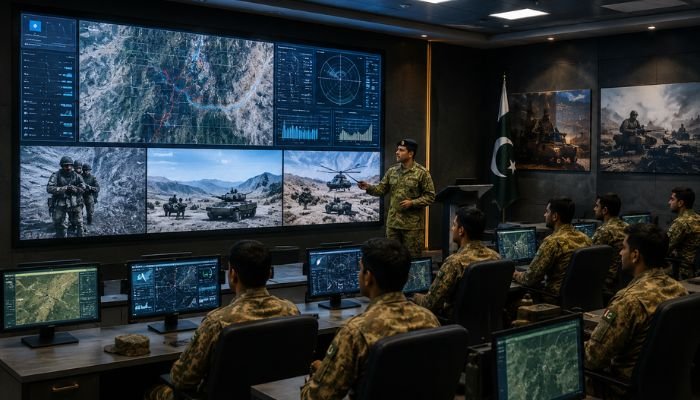
SMD Screens for Pakistan Military Training: Applications and Future in 2026
| TL;DR — Quick Answer SMD screens are increasingly used across Pakistan’s military training ecosystem for simulation centers, command-room situational displays, tactical briefings, and large-format instructional visuals, thanks to their high brightness, seamless large-scale imagery, and durability. In 2026, adoption is expanding toward AI-assisted training visuals, real-time data walls, and rugged outdoor SMD screens for field-exercise monitoring. Smart One Power Solution supports these installations with reliable backup power systems — UPS, voltage stabilizers, and generator integration — ensuring SMD screens used in training and briefing environments stay operational without interruption. |
Introduction
Modern training environments run on information — clear, fast, and easy to absorb at scale. Across Pakistan, institutions responsible for structured training programs are steadily replacing projectors and static display boards with SMD screens, valued for their brightness, image consistency, and ability to scale across large walls without visible seams. This shift reflects a broader global pattern: as training methods lean more heavily on simulation, data visualisation, and real-time instructional content, the display technology behind that content has to keep pace.
This article looks at how SMD screens are being applied across training-focused environments in Pakistan in 2026, the practical benefits driving adoption, the infrastructure considerations that matter most, and where this technology is heading over the next few years. Throughout, we also look at the supporting role of power backup infrastructure — an often-overlooked piece of any reliable large-format display installation — an area where providers such as Smart One Power Solution play a supporting role.
What Are SMD Screens?
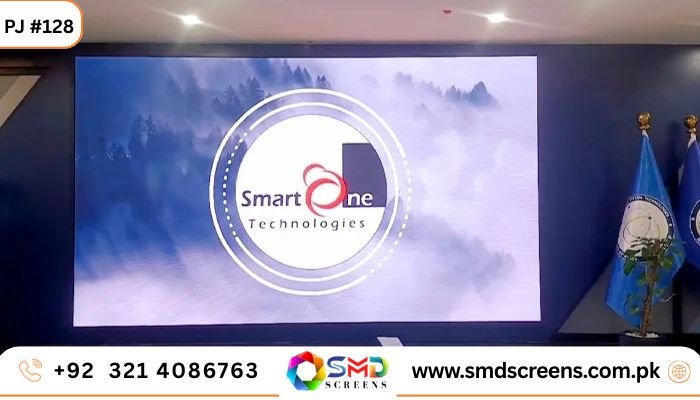
SMD screens use Surface-Mounted Device LED technology, where red, green, and blue diodes sit together on a single mounted chip. Compared to older display technologies, this produces smoother colour transitions, wider viewing angles, and sharper detail — qualities that matter enormously in training settings where trainees need to read maps, data overlays, or simulation visuals clearly from multiple seating positions. SMD screens are now the standard choice for large-format indoor video walls, outdoor display boards, and modular LED walls used in institutional and instructional settings.
Why Training Environments Are Adopting SMD Screens
Training delivery has changed. Static slideshows and printed materials are giving way to dynamic, visual-first instruction — scenario walkthroughs, live data feeds, mapping software, and simulation software all benefit from a large, bright, high-resolution canvas. SMD screens fit this need particularly well for a few practical reasons.
- Scalability: SMD panels can be combined into video walls of almost any size, allowing a single seamless image across an entire room or open ground.
- Brightness control: modern SMD screens adjust automatically to ambient light, staying legible indoors under fluorescent lighting or outdoors under direct sun.
- Durability: quality SMD screen panels are built for continuous, long-duration operation — a requirement in structured training schedules that run daily.
- Flexible content: the same screen infrastructure can display maps, video feeds, statistics, schedules, or simulation output without needing separate hardware for each format.
Key Applications of SMD Screens in Military Training 2026
Training establishments increasingly rely on large-format visual technology to support structured, scenario-based, and data-driven instruction. Below are the main areas where SMD screens are being applied, along with what each use case typically requires from the display hardware.
| Training Area | Typical SMD Screen Use | Key Requirement |
| Simulation & Virtual Training Centers | Large-format immersive video walls for scenario-based training | High resolution, seamless bezel, colour accuracy |
| Command & Situational Displays | Real-time data and map visualisation walls | Reliability, 24/7 uptime, stable power supply |
| Briefing & Instructional Rooms | Indoor SMD screens for lectures, planning sessions | Sharp clarity at close viewing distance |
| Field Exercise Monitoring | Outdoor/rugged SMD screens for open-ground display | Weatherproofing, high brightness, dust resistance |
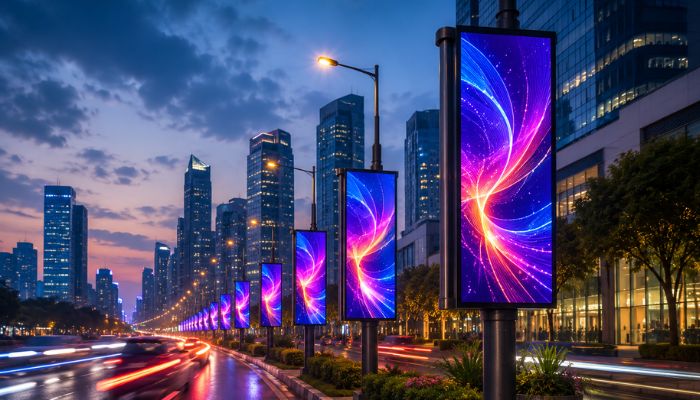
| Ceremonial & Public Displays | Large outdoor SMD screens for parades and events | Wide viewing angle, high brightness in daylight |
Simulation and Virtual Training Centers
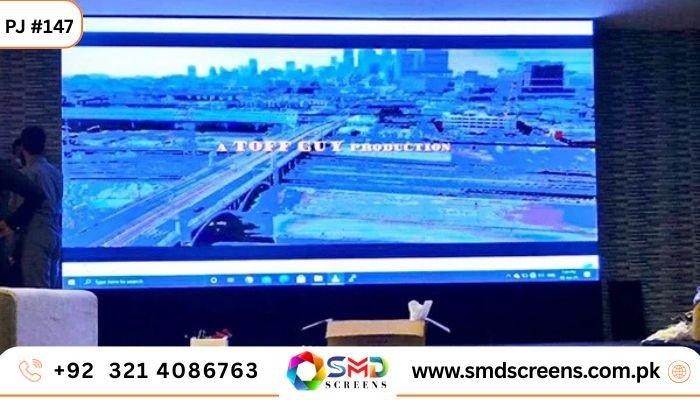
Simulation-based instruction increasingly depends on immersive visuals that respond in real time. Large SMD screen video walls, built from multiple seamlessly joined panels, allow simulation software to display wide-angle scenario visuals that would be impossible on a single monitor. This supports scenario familiarisation, decision-making exercises, and group-based training sessions where multiple trainees need a shared, synchronized view.
Command and Situational Awareness Displays
Control-room-style environments benefit from SMD screens configured as data walls — combining maps, schedules, live feeds, and status indicators on one continuous surface. The priority here isn’t just resolution but reliability: a display that must stay operational around the clock needs stable power delivery, redundant components, and a supplier who understands uptime requirements, which is where dependable backup power infrastructure becomes essential.
Briefing Rooms and Instructional Halls
Indoor SMD screens with finer pixel pitch are well suited to briefing rooms and lecture-style instructional halls, where trainees sit closer to the display and need to read text, diagrams, or data clearly. These installations prioritise colour accuracy and consistent brightness over raw screen size.
Field Exercise Monitoring and Open-Ground Displays
Outdoor training exercises benefit from rugged, weatherproof SMD screens capable of displaying schedules, live footage, or instructional content in open-air conditions. These panels need higher brightness ratings to remain visible in daylight and dust- and moisture-resistant housings to withstand Pakistan’s varied outdoor climate, from Punjab’s summer heat to humid coastal training zones.
Ceremonial and Public-Facing Displays
Large outdoor SMD screens also support public-facing events such as parades, passing-out ceremonies, and formal gatherings, where wide viewing angles and strong daylight visibility ensure large audiences can follow proceedings clearly from a distance.
Why Power Reliability Matters as Much as the Screen Itself
An SMD screen is only as reliable as the power feeding it. Training environments that run displays for extended hours — sometimes continuously — cannot afford flickering, sudden shutdowns, or voltage-related hardware damage. This is particularly true for command displays and simulation centers, where an interrupted training session has real operational cost.
Smart One Power Solution specialises in exactly this layer of the installation: UPS systems, automatic voltage stabilizers, and generator-backed power continuity designed to keep SMD screen installations running smoothly, even during grid fluctuations or outages. Pairing a high-quality SMD screen with a properly engineered power backup system is what actually determines whether a training-room display performs reliably over years of daily use, rather than just during a demonstration.
For institutions planning SMD screen installations in 2026, treating power infrastructure as a core part of the project — not an afterthought — is one of the most practical steps toward long-term reliability.
Climate and Durability Considerations Across Pakistan
Pakistan’s geography presents a wide range of operating conditions for SMD screens used in training facilities — from high summer temperatures in Punjab and Sindh to dust exposure in semi-arid regions and humidity along the coast. Outdoor and semi-outdoor SMD screen installations need an appropriate IP rating for dust and moisture resistance, along with thermal management to prevent brightness degradation during prolonged heat exposure. Indoor SMD screens face fewer environmental challenges but still require stable climate control and consistent power to maintain colour accuracy and panel lifespan over continuous daily use.
The Future of SMD Screens in Training Environments: Trends for 2026 and Beyond
Several trends are shaping how SMD screens will be used across Pakistan’s structured training environments in the coming years.
- Finer pixel pitch technology: continued improvement in pixel density is making close-viewing indoor SMD screens sharper without increasing physical footprint.
- Integration with simulation and data software: SMD screen walls are increasingly built as part of a connected ecosystem, syncing with simulation platforms, scheduling systems, and live data feeds rather than functioning as standalone displays.
- Energy-efficient panels: newer SMD screen models draw less power per unit of brightness, reducing the load on backup power systems and lowering long-term operating costs.
- Modular, scalable installations: training facilities are favouring modular SMD screen walls that can be resized or reconfigured as training programs evolve, rather than fixed, single-purpose displays.
- Stronger emphasis on uptime engineering: as reliance on visual training tools grows, pairing SMD screens with dependable power backup solutions is becoming a standard planning requirement rather than an optional add-on.
Taken together, these trends point toward SMD screens becoming a more deeply integrated, infrastructure-level technology within Pakistan’s training ecosystem — not just a display upgrade, but a core part of how instruction, simulation, and real-time information are delivered.
Choosing the Right SMD Screen Supplier for a Training Facility
Selecting a vendor for an SMD screen installation in a training environment involves more than comparing panel specifications. Because these displays typically run for years under continuous, demanding schedules, the supplier’s experience with large-format installations, local climate conditions, and after-sales support matters just as much as the hardware itself.
- Installation experience: look for a supplier with a track record of large-format SMD screen video walls, not just retail or advertising signage.
- Local climate expertise: a vendor familiar with Pakistan’s regional conditions can recommend the right IP rating and brightness level for indoor, semi-outdoor, or fully outdoor SMD screens.
- Integrated power planning: ask whether the supplier can coordinate UPS, stabilizers, or generator backup alongside the display — a gap that providers like Smart One Power Solution are specifically built to close.
- Maintenance and spare parts: continuous-use environments need fast access to replacement modules and technical support to avoid extended downtime.
- Scalability for future upgrades: choose a modular SMD screen system that can be expanded or reconfigured as training programs and technology requirements evolve.
Getting these decisions right at the planning stage — rather than after installation — is what separates an SMD screen system that performs reliably for years from one that becomes a recurring maintenance headache.
Frequently Asked Questions
What makes SMD screens suitable for training environments?
SMD screens offer high brightness, seamless large-format imagery, and durability for continuous daily use, making them well suited to simulation centers, briefing rooms, and command-style situational displays.
Can SMD screens be used outdoors for field exercises?
Yes. Outdoor-rated SMD screens with appropriate IP ratings and higher brightness levels are designed to remain clearly visible and durable in open-ground, daylight, and varied weather conditions.
Why does power backup matter for SMD screen installations?
SMD screens used in training and command environments often run for extended hours and cannot tolerate voltage fluctuations or outages. Reliable power backup, such as the systems provided by Smart One Power Solution, protects the display hardware and keeps training sessions uninterrupted.
What is the difference between indoor and outdoor SMD screens for training use?
Indoor SMD screens typically use a finer pixel pitch for close-viewing clarity in briefing rooms, while outdoor SMD screens prioritise higher brightness and weatherproofing for open-ground visibility.
What trends will shape SMD screen use in 2026 and beyond?
Expect finer pixel pitch technology, tighter integration with simulation and data software, more energy-efficient panels, modular scalable installations, and greater emphasis on power reliability and uptime engineering.
Final Thoughts
SMD screens have moved well beyond advertising and retail use — they are becoming a foundational part of how structured training environments in Pakistan deliver instruction, simulation, and real-time information in 2026. Their brightness, scalability, and durability make them a natural fit for simulation centers, briefing rooms, situational displays, and field-exercise monitoring alike.
But a display is only as dependable as the infrastructure behind it. Pairing the right SMD screen configuration with dependable power backup — the kind of engineering support offered by Smart One Power Solution — is what ultimately determines whether a training facility’s visual technology performs reliably, day after day, for years to come.